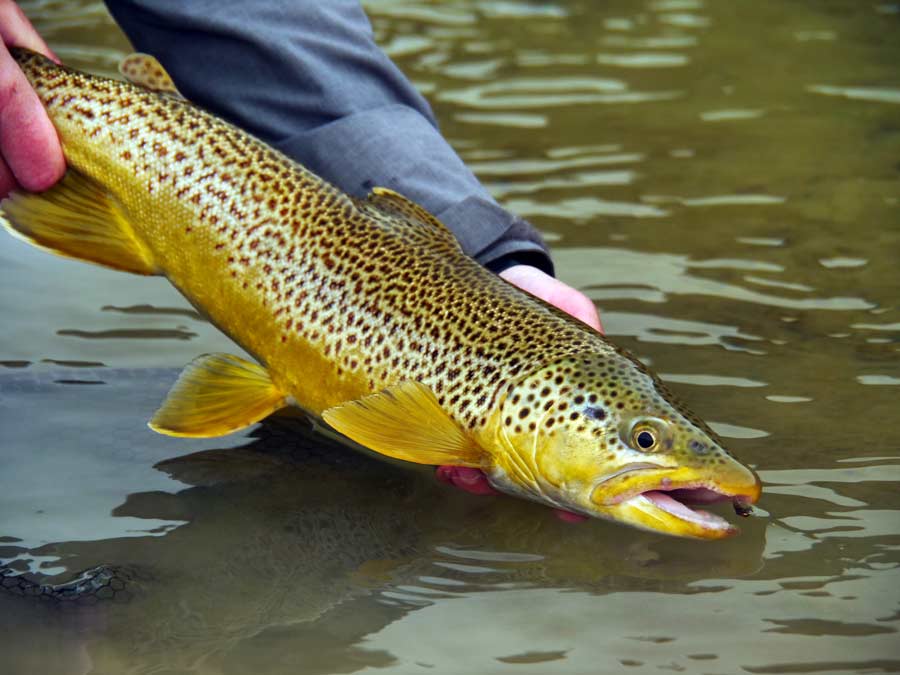
Fishing conditions can drastically shift after a cold, wet change in weather, leaving anglers frustrated when expectations aren't met. Amelia Jensen of Jensen Fly Fishing emphasizes that trout, in particular, may take time to react to sudden temperature drops, and modifying your approach is key to success.
"If there is too steep a barometric and temperature change, trout feeding activity will drop substantially," said Jensen. She highlights that particularly during the fall and late spring, the impacts of these shifts can render fishing spots quiet. Anglers hoping to snag a catch should consider allowing a day for fish to adjust, especially following a drastic drop in temperatures.
"If there is too steep a barometric and temperature change, trout feeding activity will drop substantially,"

Timing can be as crucial as location. Jensen advises waiting until late morning or early afternoon to maximize chances of encountering hatches. "Hatches aren’t likely until early afternoon and normally only last for two to three hours," she noted, pointing out that post-cold conditions mean a narrower window for action. Therefore, if anglers love to focus on hatches, taking the morning to relax can be beneficial.
"Hatches aren’t likely until early afternoon and normally only last for two to three hours,"

Equipping oneself for the cold is also vital. "Dress in layers, with a good hat, gloves, and a buff," urged Jensen. Being prepared for the elements can lead to longer trips on the water and ultimately, more success.
"Dress in layers, with a good hat, gloves, and a buff,"
Career Journey
When it comes to fishing techniques, Jensen recommends using streamers in the early part of the day. "Mornings can be extremely slow, with fish glued to the bottom," she explained. Streamers can help cover more water and provoke strikes when other methods yield fewer results.
"Mornings can be extremely slow, with fish glued to the bottom,"
"Fish the water close to you, and then progressively cast farther out," she advised, highlighting the importance of casting techniques. Allowing streamers to swing in the current, with intermittent movements, can create an enticing presentation for sluggish trout.
"Fish the water close to you, and then progressively cast farther out,"
Additionally, Jensen suggests experimenting with dead-drifting small streamers, mimicking nymphing techniques. "Sometimes sluggish trout are waiting for the next dead thing to drift past," she noted, indicating that using heavier nymph patterns can pay off as well.
"Sometimes sluggish trout are waiting for the next dead thing to drift past,"

As the water warms slightly, trout may begin to look for hatching insects in deeper waters. "When heavier hatches do come off, trout can be active, but you may not see a single rise," Jensen warned. She encourages anglers to focus on nymphing, particularly before visible hatches begin.
"When heavier hatches do come off, trout can be active, but you may not see a single rise,"
Short-line or Czech nymphing methods shine in these conditions, allowing for quick and effective presentation of flies in productive areas. Jensen elaborated, "Czech nymphing gets flies in the zone quickly and repetitively, increasing your chances of hooking up."
In response to temperature changes, adjusting the size of flies is paramount. Jensen advises downsizing, stating, "Trout are sluggish, and so too are the larger stonefly nymphs. These are times to tie on tungsten beadhead nymphs in sizes 16 through 20." However, she also suggests that after starting small, it may be advantageous to introduce larger, shinier patterns later on.
"A little flash in dark conditions sometimes gets the trout’s attention," she added, emphasizing the importance of visual appeal in murky waters. By balancing small and large offerings in your fly selection, you may effectively attract both cautious and aggressive feeders.
"A little flash in dark conditions sometimes gets the trout’s attention,"
In conclusion, fishing successfully after a wet, cold weather change demands adaptability and patience. Through strategic planning, proper attire, and tactical choices, anglers can better their chances and potentially enjoy a thrilling day on the water. As Jensen aptly notes, the key lies in understanding the fish's behavior and adapting your methods accordingly, ensuring you make the most of your fishing experience, no matter the weather conditions.