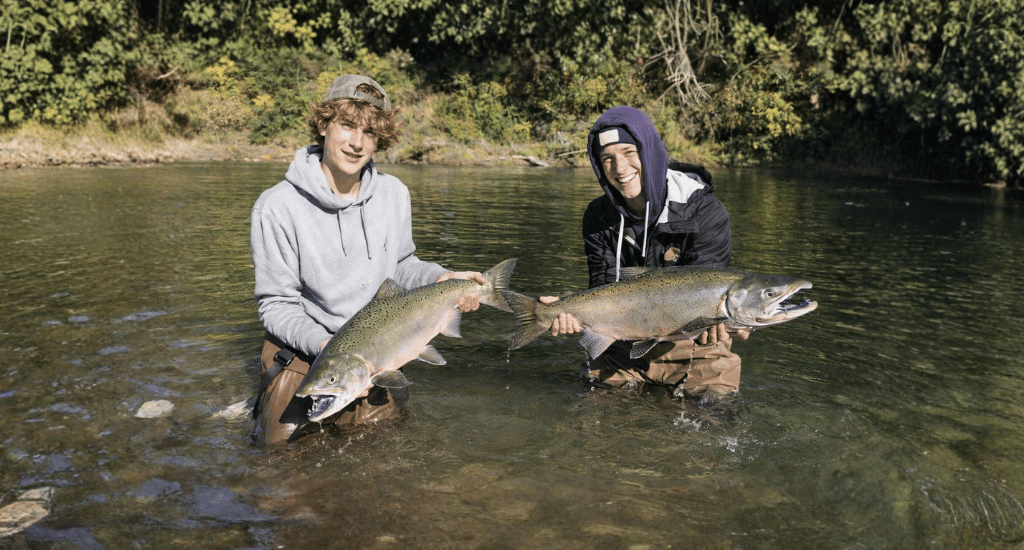
As salmon runs continue to attract dedicated anglers across North America, fly fishing enthusiasts are refining their approaches to successfully target these powerful fish. The art of salmon fly fishing has evolved beyond simple casting, with experienced guides and professional anglers emphasizing the critical importance of presentation techniques that trigger the predatory instincts of these magnificent fish.
"It's not just about the cast; it's about how you present the fly in the water, engaging the fish's instincts," explained renowned angler Mark Rivers. This philosophy has driven the development of three primary techniques that are proving most effective for salmon fishing: the wet-fly swing, stripping streamers, and dead-drift nymphing.
"It's not just about the cast; it's about how you present the fly in the water, engaging the fish's instincts,"


Unlike trout fishing, where fish may feed casually throughout the day, salmon present unique behavioral challenges. These fish are less likely to feed in a traditional sense once they enter freshwater systems. Instead, they strike out of aggression, territorial behavior, or simple curiosity. Understanding this fundamental difference has become crucial for anglers planning successful fishing expeditions.
The wet-fly swing remains the cornerstone technique for salmon fly fishing, earning praise from veteran guides for its effectiveness in diverse conditions. "Salmon tend to hold in spots facing upstream, so swinging the fly downstream lets them see it move across their strike zone," shared veteran fishing guide Sarah Thompson.
"Salmon tend to hold in spots facing upstream, so swinging the fly downstream lets them see it move across their strike zone,"
The technique requires anglers to cast at a 45 to 60-degree angle across the current, allowing the water flow to swing the fly in a natural arc while maintaining constant tension on the line. Thompson emphasized the importance of this tension, noting that "keeping the line tight is essential; slack leads to missed strikes and poor hook penetration."
To maximize water coverage, experienced anglers recommend letting the fly hang at the end of each swing before taking a couple of steps downstream and casting again. This methodical approach ensures comprehensive coverage without leaving gaps in the fishing zone.
Impact and Legacy
Impact and Legacy
Impact and Legacy
Professional angler Jake Simmons has found that adjusting swing speed through line mending can significantly impact success rates under varying conditions. "An upstream mend slows the fly, making it enticing in colder waters, while a downstream mend speeds it up, which can provoke aggressive fish," Simmons noted. Optimal results typically occur when fishing water that moves at 3 to 5 mph in depths ranging from 4 to 10 feet.
"An upstream mend slows the fly, making it enticing in colder waters, while a downstream mend speeds it up, which can provoke aggressive fish,"
When traditional swinging becomes less effective, particularly in slower waters or deep pools, the streamer stripping technique offers an alternative approach. This method focuses on visual stimulation, mimicking the movement of fleeing prey to trigger aggressive strikes.
"In pools or slow waters, you need to mimic the movement of fleeing prey," explained fishing outfitter Jessica Walters. The technique involves casting across or slightly upstream and varying retrieval speeds to create erratic action that draws salmon from their holding positions.
"In pools or slow waters, you need to mimic the movement of fleeing prey,"
Walters recommends using a countdown method to determine proper sinking time before beginning retrieval. "Long pulls imitate baitfish, while short strips suggest wounded prey," she detailed. Adding strategic pauses between pulls can further enhance the fly's attractiveness, often drawing salmon out from cover.
"Long pulls imitate baitfish, while short strips suggest wounded prey,"
For pressured fish or particularly calm waters, the dead-drift technique offers the most subtle presentation option. Expert angler Kevin Hart considers it essential for challenging conditions: "It's the best way to present a fly when fish are spooked or picky, as it mimics a natural flow without any drag."
This technique requires precise rigging, typically utilizing strike indicators and split shot to achieve proper depth. Hart emphasized the importance of watching for subtle indicator movements that signal potential strikes. "Any dip or twitch could mean a fish is interested, so be ready to set the hook quickly," he cautioned.
"Any dip or twitch could mean a fish is interested, so be ready to set the hook quickly,"
Egg patterns and nymphs prove particularly effective with this technique, as they closely resemble natural food sources that salmon encounter during their spawning migrations.
Successful salmon fly fishing also demands the ability to read water and identify productive fishing locations. While the original content was cut off, the emphasis on finding water 4 to 10 feet deep with appropriate current speed reflects the importance of understanding salmon habitat preferences.
The evolution of these techniques reflects the growing sophistication of salmon fly fishing, where success depends not just on equipment quality but on understanding fish behavior, water conditions, and presentation methods. As anglers continue to refine these approaches, the combination of traditional techniques with modern insights promises to enhance success rates for those pursuing these prized fish.
For both novice and experienced anglers, mastering these three fundamental techniques provides the foundation for successful salmon fly fishing adventures, regardless of location or conditions encountered on the water.