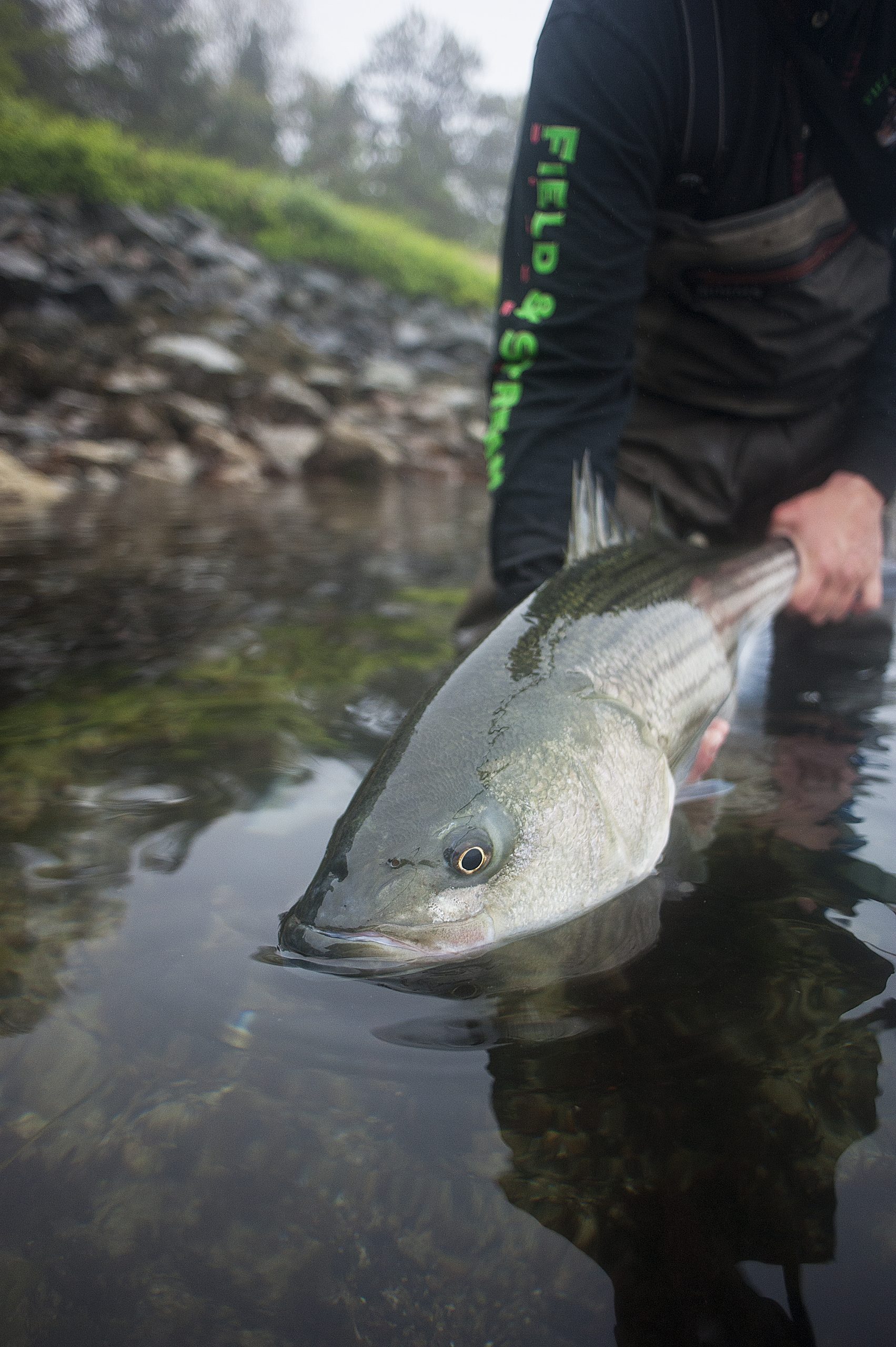
Every striped bass angler knows the frustration: you've located a school of feeding fish, but despite your best efforts, they refuse to strike. Those moments of high anticipation can quickly dissolve into disappointment when artificial baits fail to produce a single hit.
Seasoned angler Bill Bertsch has witnessed this scenario countless times over his decades on the water. "Every year I hear of instances where schools of bass refused to hit anything thrown at them," Bertsch shared. His extensive experience has revealed several key strategies that can transform those challenging situations into successful fishing trips.
"Every year I hear of instances where schools of bass refused to hit anything thrown at them,"

The behavior of finicky striped bass often correlates directly with environmental conditions. When these fish become particularly selective, they typically feed close to the surface, and water clarity emerges as a critical factor influencing their behavior. Both crystal-clear waters and off-colored conditions can make stripers either overly cautious or completely uninterested in standard presentations.

"Under these conditions, my observations suggest that the fish are either seeing too much of a lure or not enough of it," Bertsch explained. Understanding this dynamic and adapting accordingly can be the difference between a memorable day on the water and heading home empty-handed.
"Under these conditions, my observations suggest that the fish are either seeing too much of a lure or not enough of it,"
**The Speed Solution**
Career Journey
One of the most effective techniques Bertsch has discovered involves a simple but crucial adjustment: changing the speed of lure retrieval. This revelation came to him nearly 25 years ago during a particularly challenging outing that ultimately proved successful.
"Have you ever had a striper smack your plug as you hurriedly reeled in the last ten yards of your retrieve to make another cast?" Bertsch asked, describing a scenario familiar to many anglers. This common occurrence actually reveals an important truth about striped bass behavior – they often respond aggressively to rapidly moving baits, especially in calm, clear water conditions.
"An increase in speed can, and will, trigger strikes from stripers feeding in crystal clear water," Bertsch emphasized. He recalls a particular day at the beach when false albacore were prevalent in the area. Following conventional wisdom for targeting albies, he retrieved his [lures](/gear/fishing-lure) as quickly as possible. After a series of swift retrieves, he was pleasantly surprised to hook a substantial striped bass instead of his intended quarry.
"An increase in speed can, and will, trigger strikes from stripers feeding in crystal clear water,"
The success of high-speed retrieves depends heavily on lure selection. Not all artificial baits can maintain their effectiveness when moved rapidly through the water. Bertsch recommends specific lures that have proven capable of handling faster retrieves without losing their appeal or spinning out. Among his top choices are the Bomber Long A, Cotton Cordell Red Fins, and Yo-Zuri Mag Darter.
"The trick is to use lures that can handle faster retrieves without losing their appeal," Bertsch noted. These lures maintain their swimming action and attractive movement patterns even when retrieved at speeds that would cause lesser baits to fail.
"The trick is to use lures that can handle faster retrieves without losing their appeal,"
**Presentation Variables**
Beyond speed adjustments, successful striped bass fishing requires attention to multiple presentation variables. Many anglers make the mistake of sticking with a single approach when fish aren't responding, but Bertsch advocates for systematic experimentation.
"Vary your retrieve speed. Change lures and colors," he advised. This methodical approach to testing different combinations can reveal patterns that entice reluctant striped bass. The key lies in paying careful attention after each cast, watching for any signs of fish interest or responsiveness that might indicate you're moving in the right direction.
Lure color, pattern, and style all play roles in triggering strikes from selective fish. What works on one day may prove ineffective the next, making adaptability a crucial skill for consistent success. Bertsch emphasizes the importance of carrying a variety of options and being willing to experiment until finding the right combination.
**Environmental Factors**
Impact and Legacy
Water conditions significantly influence striped bass behavior and feeding patterns. During periods of strong tidal movement or when water temperatures shift, these fish often become particularly selective about what they'll strike. Bertsch has observed that clear water conditions especially prompt bass to scrutinize lures more closely, making them harder to fool with standard presentations.
"Frustration creeps in when a school begins to move away, and you haven't yet felt that first strike," Bertsch remarked. This scenario underscores the importance of staying adaptable and responsive to changing conditions including weather patterns, time of day, and seasonal variations.
"Frustration creeps in when a school begins to move away, and you haven't yet felt that first strike,"
Successful striped bass anglers learn to read these environmental cues and adjust their tactics accordingly. What works during a cloudy, choppy day may prove completely ineffective under bright, calm conditions.
**Mastering the Challenge**
As striped bass fishing continues attracting enthusiasts along coastal waters, understanding fish behavior and refining techniques becomes increasingly valuable. The insights shared by experienced anglers like Bertsch provide a roadmap for converting potential frustration into productive outings.