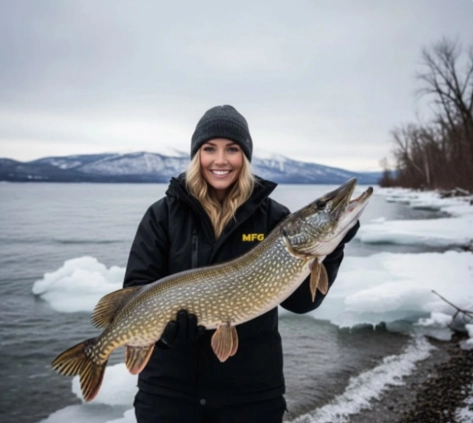
As winter arrives and temperatures drop, anglers need to adjust their approach to pike fishing. When water cools below 8°C (46°F), the behavior of pike shifts dramatically, leading to a decrease in aggressive strikes. "The fast, aggressive strikes from early fall slow down," emphasized one experienced angler. To succeed in catching pike, adapting your fishing tactics is essential.
"The fast, aggressive strikes from early fall slow down,"
With the right adjustments, you can continue to reel in pike even as many anglers struggle. This guide outlines key strategies—from adjusting your positioning and depth control to recalibrating your retrieve cadence—to effectively target pike during the winter months.


Winter pike fishing requires understanding how these fish behave in colder water. As temperatures drop, pike's metabolism slows, causing them to conserve energy. "Every movement costs energy, so it stops chasing and starts waiting for prey to come close," noted an expert in cold-water fishing habits. This means pike will still take strong strikes, but only if the prey appears as an effortless meal within their strike zone.
"Every movement costs energy, so it stops chasing and starts waiting for prey to come close,"
Race Results
Race Results
Race Results
The feeding windows during winter are notably brief. "In cold water, pike feed in brief, predictable intervals that often last 30–90 minutes," explained a local fishing guide. These intervals may shift due to changes in light, pressure, or wind direction. As a result, being in the right spot at the right time becomes more critical than a full day of fishing. Surprisingly, night fishing can outperform daytime sessions, as fewer anglers are on the water, yet the same narrow feeding windows occur after dark.
"In cold water, pike feed in brief, predictable intervals that often last 30–90 minutes,"
Current Season
Current Season
Where you position yourself greatly influences your success. Instead of moving around, pike tend to stay near edges, drop-off lines, and areas with reduced current that hold baitfish. "If your lure isn’t moving through these zones, you’re not actually fishing for pike; you’re just casting," remarked a seasoned pike fisherman. This highlights the importance of staying in prime locations.
"If your lure isn’t moving through these zones, you’re not actually fishing for pike; you’re just casting,"
In addition to positioning, depth control is crucial. For lakes, pike often inhabit depths of 4–9 meters (13–30 feet), while in rivers, they prefer pockets just off the main current. It's vital to keep your presentation within this depth band long enough for the fish to respond. According to one expert, "Your success depends on keeping your lure in that depth band long enough for the fish to commit."
Moreover, effective lure presentations in winter require a focused approach. Slow retrieves still need to convey signals to the pike—meaning pauses, glides, and gentle rolls. "Strikes happen when the lure hovers or stalls close to the fish," clarified a veteran angler, underscoring that winter fishing prioritizes patience and control over rapid movements.
"Strikes happen when the lure hovers or stalls close to the fish,"
Barometric pressure serves as a significant factor affecting winter pike feeding patterns. These fish do not feed continuously; rather, they react to changes in pressure that can indicate fluctuations in light, weather, or the behavior of available prey. Understanding these dynamics could change your fishing success.
A falling barometer generally signals productive fishing conditions, as it often brings cloud cover and wind, making pike more confident and willing to venture out of their hiding spots. "Under these conditions, pike become noticeably more confident, sliding slightly out of their tight holding zones and feeding during short but predictable windows," said a fishing analyst. This is critical for planning your fishing sessions effectively.
"Under these conditions, pike become noticeably more confident, sliding slightly out of their tight holding zones and feeding during short but predictable windows,"
Conversely, stable or rising barometric pressure can create challenging conditions. Under clear skies and high visibility, pike enter a defensive mode, moving less and feeding only when everything aligns favorably. "During these periods, success depends on fishing slower, deeper, and with longer pauses," explained an expert on fish behavior.
"During these periods, success depends on fishing slower, deeper, and with longer pauses,"
Ultimately, it’s important not to get caught up in exact pressure readings. Instead, observe the direction of pressure change and how it complements stable cold-water temperatures. "When paired together, these factors can make winter strike windows far more predictable," asserted a fishing expert familiar with seasonal patterns.
"When paired together, these factors can make winter strike windows far more predictable,"
By honing in on these strategies and genuinely understanding pike behavior this winter, anglers can improve their chances of success despite the challenges the season presents. Fishing becomes less about sheer volume and more about tactical approaches, turning those brief moments of opportunity into productive catches.