As winter temperatures plunge and lakes across the northern United States solidify into ice fishing playgrounds, anglers are preparing for one of the most challenging yet rewarding pursuits in freshwater fishing: targeting walleye through the ice. Known for their finicky nature and exceptional table fare, walleye present a unique challenge that requires both skill and the right equipment to master.
Nick Dumke, a seasoned contributor at Wired2Fish, has developed a strategic approach to walleye ice fishing that prioritizes lure selection based on aggression levels. His methodology centers on a simple but effective principle: start aggressive and scale down based on fish response.
"When I approach a new body of water, I always begin with my most aggressive [lures](/gear/fishing-lure) to find out how the fish are reacting," Dumke explained. This strategy allows anglers to quickly gauge the mood of the fish and adjust their presentation accordingly, maximizing both efficiency and success rates on the ice.

"When I approach a new body of water, I always begin with my most aggressive lures to find out how the fish are reacting,"

Dumke's ranking system is particularly valuable for ice anglers who face unique challenges compared to their open-water counterparts. Moving from spot to spot requires significant effort when drilling through ice, making it crucial to quickly determine the most effective approach at each location.
**Leading the Aggression Scale: Lipless Crankbaits**
Topping Dumke's list is the lipless crankbait, a lure that commands attention through sheer noise and vibration. "The rattling lipless crankbait gives off the most sound and vibration of any lure on my list," Dumke emphasized. These lures excel at attracting larger walleye and can call fish from considerable distances in the confined underwater environment beneath the ice.
"The rattling lipless crankbait gives off the most sound and vibration of any lure on my list,"
However, Dumke cautions that this aggressive approach comes with trade-offs. In heavily pressured waters, walleye can become conditioned to these loud presentations, reducing their effectiveness over time. Additionally, when fish are in a neutral or negative mood, the aggressive nature of lipless crankbaits may actually repel rather than attract.

**Versatility Champions: Gliding Jigs**
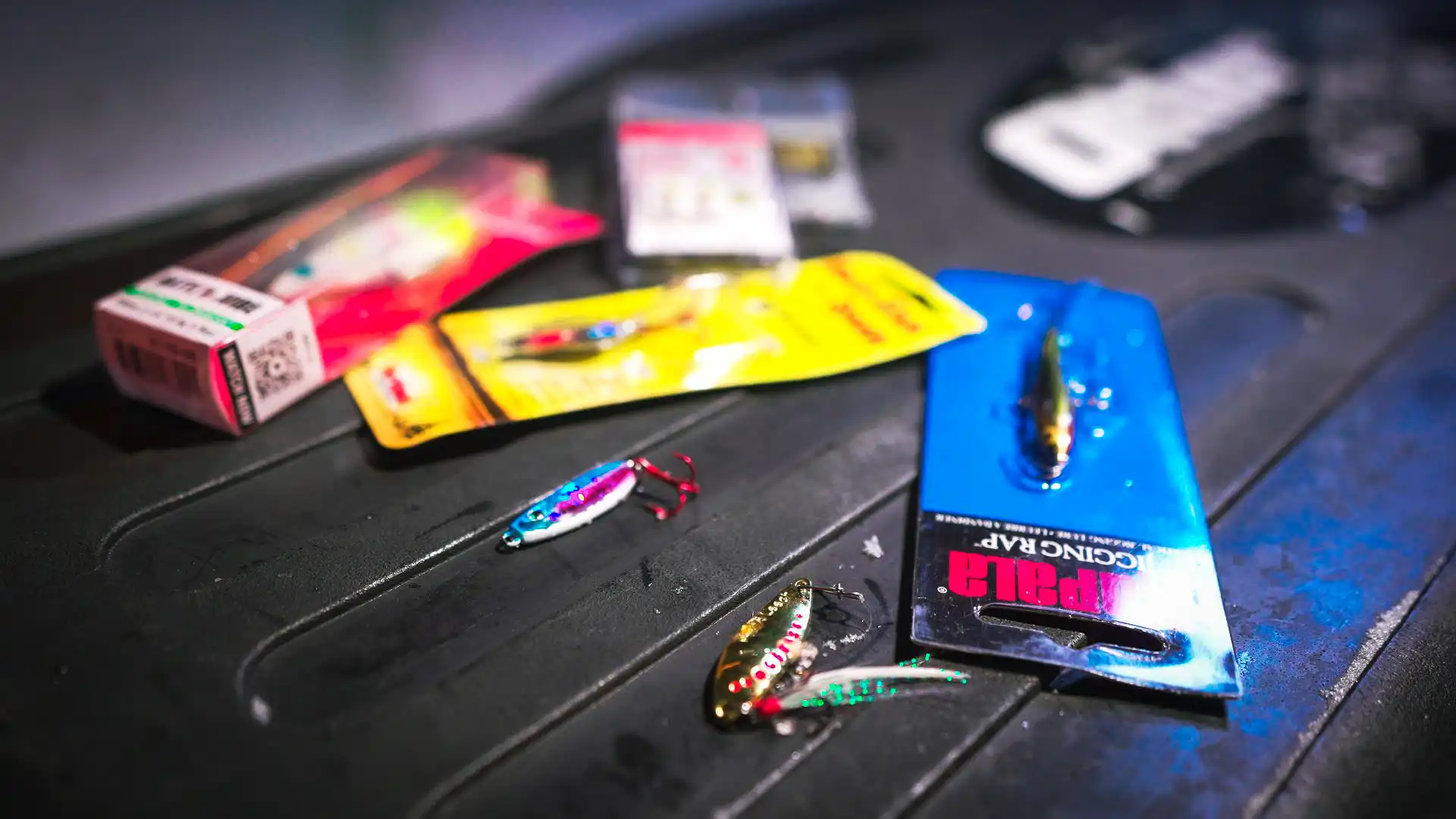
Securing the second position are gliding jigs, with Dumke particularly favoring the Rapala Jigging Rap for its exceptional versatility. "These jigs can be fished aggressively or with a gentle lift and fall," he explained, highlighting their adaptability to changing conditions.
"These jigs can be fished aggressively or with a gentle lift and fall,"
This versatility proves invaluable during those frustrating periods when the bite slows down. Anglers can quickly transition from aggressive ripping motions to subtle finesse presentations without changing lures, allowing them to stay in productive areas longer while adapting to fish behavior.
**Sound Strategy: Rattle Spoons**
Rattle spoons claim the third spot in Dumke's ranking system, offering a middle-ground approach between aggressive attraction and subtle presentation. "Rattle spoons add a rattle chamber for making noise, much like the rattling lipless crankbaits," Dumke noted.
"Rattle spoons add a rattle chamber for making noise, much like the rattling lipless crankbaits,"
The strategic advantage of rattle spoons lies in their ability to draw walleye into the immediate area, which becomes particularly important in ice fishing where mobility is limited. The sound can act as a dinner bell, alerting fish to the presence of potential prey. However, Dumke acknowledges that this same sound can sometimes work against anglers, particularly with pressured or finicky fish.
**Flash and Flutter: The Silent Producers**
Flutter spoons occupy the fourth position, offering a more subtle approach while maintaining visual attraction. "Flutter spoons are designed to flutter either on the upstroke, fall, or both," Dumke explained, describing their unique action that produces flash and vibration without excessive noise.
"Flutter spoons are designed to flutter either on the upstroke, fall, or both,"
This balanced approach makes flutter spoons effective for both aggressive and cautious walleye, providing anglers with the flexibility to modify their retrieve based on real-time fish response. The visual stimulation combined with moderate vibration often proves irresistible to walleye cruising beneath the ice.
Race Results
**Finesse Finishers: Slab Spoons**
Slab spoons round out the primary lure categories at number five, representing the finesse end of Dumke's spectrum. "These do-nothing spoons can trigger finicky walleye when nothing else will," Dumke stated, emphasizing their effectiveness with pressured or inactive fish.
"These do-nothing spoons can trigger finicky walleye when nothing else will,"
The realistic profile of slab spoons, particularly when enhanced with a minnow head on the treble hook, provides both visual appeal and scent attraction. This combination often proves decisive when walleye are in a neutral mood and require subtle convincing.
**Supporting Cast: Essential Accessories**
Dumke's system extends beyond primary lures to include crucial supporting equipment. The VMC Glow Resin Octopus Hook enhances the effectiveness of various presentations, while Water Gremlin Green Gremlin Removable Split Shot allows for quick weight adjustments to optimize lure action at different depths.
Practical considerations also play a role in ice fishing success, with Dumke recommending protective gear like StrikeMaster Pro Series Bibs to ensure anglers can fish comfortably throughout the day.
**Strategic Implementation**
The genius of Dumke's approach lies not just in lure selection but in systematic implementation. By starting with aggressive presentations and scaling down based on fish response, anglers can efficiently determine the most productive approach for specific conditions and locations.
Current Season
This methodology proves particularly valuable during the current ice fishing season, as walleye behavior can vary significantly based on factors including weather patterns, fishing pressure, and seasonal transitions. Understanding how to read fish response and adapt accordingly separates successful ice anglers from those who struggle to find consistent success.