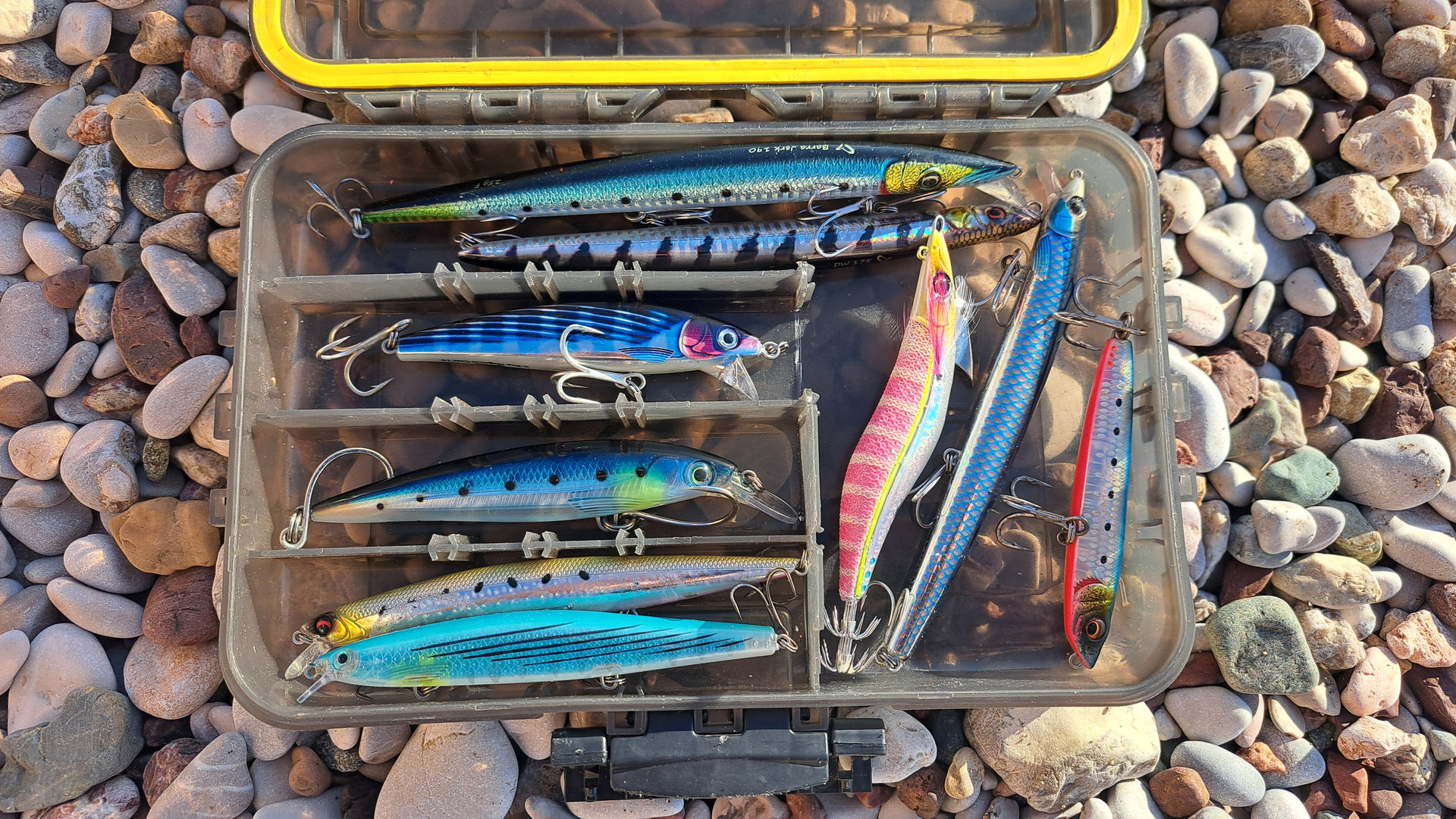
The transition from freshwater to saltwater fishing continues to challenge anglers who underestimate the ocean's demanding environment, with many discovering that their carefully selected gear fails to withstand the marine conditions that define coastal fishing.
The learning curve can be steep and expensive. "I filled my boxes with hyper-realistic patterns and delicate finishes that looked great in my hand but were completely useless in a 20-knot headwind on the Atlantic coast," said one seasoned angler reflecting on their early saltwater experiences.
"I filled my boxes with hyper-realistic patterns and delicate finishes that looked great in my hand but were completely useless in a 20-knot headwind on the Atlantic coast,"


The ocean presents a fundamentally different set of challenges compared to freshwater environments. Beyond the obvious differences in species and habitat, the marine environment itself demands specialized equipment and techniques. "Saltwater is denser, the fish are generally faster and stronger," explained another expert, highlighting the physical demands that separate coastal fishing from its freshwater counterpart.
"Saltwater is denser, the fish are generally faster and stronger,"
Corrosion proves to be one of the most immediate and costly surprises for newcomers. "I noticed that freshwater lures would often rust at the split rings within 24 hours of exposure to sea air," shared one angler, emphasizing how quickly the marine environment can destroy equipment not designed for saltwater use. This reality forces anglers to invest in corrosion-resistant materials and specialized gear, often at significantly higher costs than their freshwater equivalents.
"I noticed that freshwater lures would often rust at the split rings within 24 hours of exposure to sea air,"
Distance casting becomes another critical factor in saltwater success. Shore-based anglers frequently need to achieve casting distances of 50 to 80 meters to reach productive feeding zones, a requirement that eliminates many lures designed for shorter, more precise freshwater presentations. Wind conditions further complicate these distance requirements, often forcing anglers to abandon their preferred lures for less attractive but more functional alternatives.
To navigate these challenges, experienced saltwater anglers typically focus on four main categories of lures, each serving specific purposes in the marine environment.
Hard plastic minnows, or jerkbaits, form the cornerstone of most saltwater tackle boxes. These lures typically range from 90mm to 175mm in length and come in floating, suspending, or sinking varieties. "The bib at the front determines how deep they dive and how aggressively they wiggle," noted an industry veteran. This versatility makes them invaluable for covering large areas of water, particularly in moderate conditions.
"The bib at the front determines how deep they dive and how aggressively they wiggle,"
When targeting species like seabass near submerged structures, shallow-diving minnows operating at depths of 0.5 to 1.5 meters prove particularly effective. However, wind conditions can quickly render these lures impractical. "If the wind is blowing directly in your face, a large plastic minnow can tumble in the air, killing your casting distance," one angler cautioned, illustrating how environmental factors can dictate lure selection.
"If the wind is blowing directly in your face, a large plastic minnow can tumble in the air, killing your casting distance,"
Metal jigs emerge as the preferred solution when wind speeds increase or deeper waters demand attention. "These are essentially shaped pieces of lead or zinc, usually weighing between 20g and 60g," an experienced angler explained. Their dense, compact design allows for effective casting even in challenging conditions, making them indispensable tools for saltwater fishing.
"These are essentially shaped pieces of lead or zinc, usually weighing between 20g and 60g,"
The versatility of metal jigs extends across multiple fishing scenarios. Whether dropping them to the bottom for groupers and snappers or retrieving them quickly for pelagic species like mackerel and bluefish, these lures adapt to various fishing strategies. "I rely on these heavily when I'm parked up at a steep cliff or a breakwater where the water is 10 to 20 meters deep," one angler noted, highlighting their effectiveness in challenging terrain.
"I rely on these heavily when I'm parked up at a steep cliff or a breakwater where the water is 10 to 20 meters deep,"
Soft plastic lures offer a more subtle approach, providing designs that mimic shads, worms, or other creature baits when mounted on appropriate jig heads. Their natural feel appeals to cautious fish and allows for presentations that blend seamlessly with the marine environment. "They can be rigged 'weedless' to fish in heavy kelp or rocky structures," an angler revealed, demonstrating their adaptability to diverse bottom conditions.
"They can be rigged 'weedless' to fish in heavy kelp or rocky structures,"
However, soft plastics come with inherent vulnerabilities in the saltwater environment. "A toothy fish like a bluefish or barracuda can chop a soft plastic in half in a single bite," an expert highlighted, illustrating how predatory marine species can quickly destroy these more delicate lures. This reality encourages anglers to carry larger quantities and remain flexible in their presentations.
"A toothy fish like a bluefish or barracuda can chop a soft plastic in half in a single bite,"
The combination of environmental challenges, equipment demands, and species behavior creates a complex puzzle that saltwater anglers must solve with each outing. Success requires not only understanding these four lure categories but also knowing when conditions dictate switching between them. The ocean's unforgiving nature continues to humble even experienced anglers, reinforcing the importance of preparation, quality equipment, and adaptive strategies in pursuing saltwater fishing success.