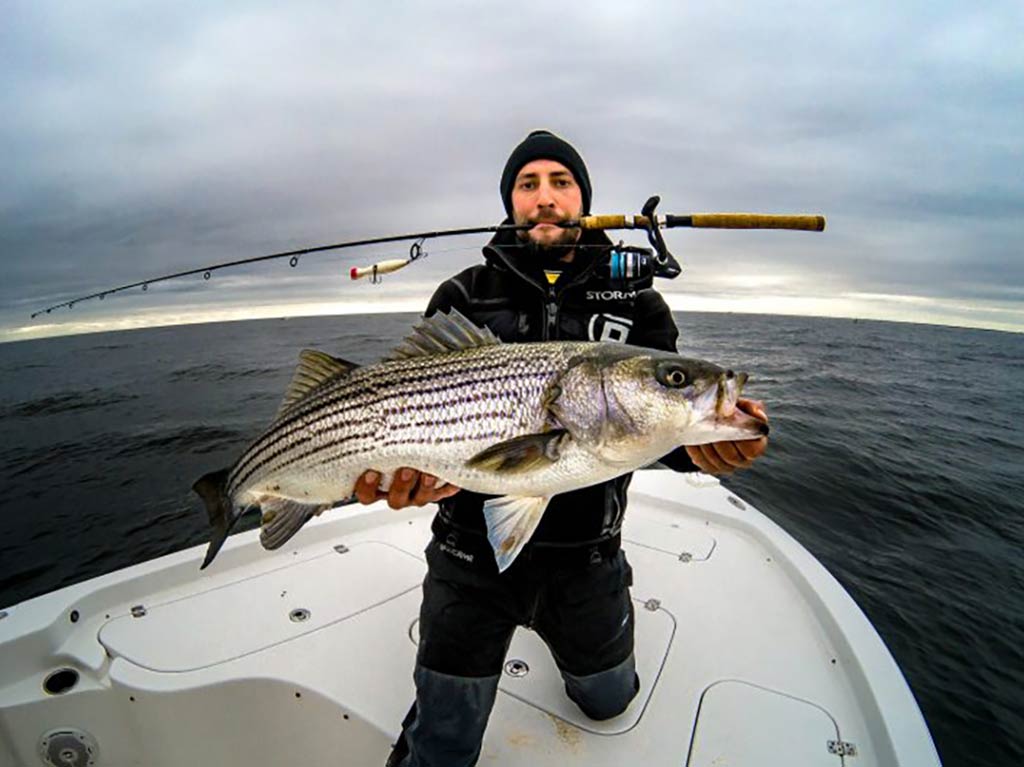
Across American waters, from the Atlantic coastline to inland reservoirs, striped bass fishing is drawing increasing numbers of anglers seeking what many consider the ultimate angling challenge. These powerful fish, known for their impressive size and aggressive fighting ability, are testing the skills of fishing enthusiasts nationwide.
"If you want to experience the challenge of bass on steroids, look to stripers," said expert angler Zach Lazzari, highlighting what makes these fish so appealing to serious anglers.
"If you want to experience the challenge of bass on steroids, look to stripers,"

The striped bass's reputation extends far beyond its size. These fish are notorious for their selective feeding habits and unpredictable behavior, creating a puzzle that many anglers find irresistible to solve. When stripers do strike, the experience is unmistakable – a sudden, powerful hit that can catch even experienced fishermen off guard during peak feeding times.

"They're very picky and difficult to catch, something that can be especially frustrating while sight fishing," Lazzari noted, explaining part of what makes stripers such a prized catch.
"They're very picky and difficult to catch, something that can be especially frustrating while sight fishing,"
Originally native to Atlantic coastal waters, striped bass have expanded their range significantly through stocking programs that have introduced them to freshwater environments across the country. This expansion has opened new opportunities for anglers who previously had to travel to coastal areas to target these fish.
The species' adaptability to different environments means anglers can now pursue stripers in two distinct settings, each offering unique challenges and opportunities.
In freshwater environments, striped bass behavior follows seasonal patterns that create prime fishing opportunities. During spring spawning runs, these fish migrate into rivers and lakes, concentrating in channels and along spawning routes where fishing can become exceptional.
"If you happen to cross paths with a spring spawning run, the fishing can be spectacular in the channels and waters along spawning routes," fishing experts note. However, the opportunities extend beyond these seasonal surges, as healthy populations of freshwater stripers can be found in lakes year-round.
"If you happen to cross paths with a spring spawning run, the fishing can be spectacular in the channels and waters along spawning routes,"
Popular destinations like Lake Mead in Nevada and Lake Texoma in Texas have become renowned for producing impressive striped bass catches. These freshwater environments offer anglers the chance to target stripers using similar techniques to those employed in saltwater, but with the added convenience of more predictable access and conditions.
Freshwater stripers maintain feeding habits similar to their saltwater cousins, targeting shad, herring, crayfish, and other readily available prey. Successful anglers focus their efforts around structures and bays where baitfish tend to school, particularly when water temperatures climb into the 60-degree range – a prime feeding temperature for stripers.
Championship Implications
Saltwater environments continue to offer their own advantages for striper fishing. Coastlines, estuaries, and areas near tidal currents provide natural congregation points where these fish gather to feed. The dynamic nature of saltwater environments means stripers often move with tides and baitfish schools, requiring anglers to adapt their strategies accordingly.
The variety of available lures adds another dimension to striper fishing's appeal. From soft plastics and jigs to topwater plugs, the options allow anglers to match their approach to specific conditions and fish behavior. The key lies in understanding what the fish are targeting at any given time.
"Tossing a lure into a feeding frenzy is truly thrilling," Lazzari explained, describing the rush that comes with successfully connecting with a feeding striper.
"Tossing a lure into a feeding frenzy is truly thrilling,"
Successful lure selection requires attention to multiple factors. Color, size, and movement patterns all play crucial roles in attracting stripers, and experienced anglers often experiment with different combinations until they find what works in specific conditions.
"Knowing what the fish are eating at the present time is key," Lazzari emphasized. "If schools of baitfish are abundant, matching your lure to their size and color can increase your chances exponentially."
"Knowing what the fish are eating at the present time is key,"
By the Numbers
This matching-the-hatch approach has become increasingly sophisticated as anglers develop better understanding of striper feeding patterns. When baitfish are present in large numbers, successful anglers observe the size, color, and behavior of the prey fish, then select lures that closely mimic these characteristics.
The growing popularity of striped bass fishing reflects broader trends in sport fishing, where anglers increasingly seek challenging species that test their skills. Unlike some fish that can be caught using relatively simple techniques, stripers demand patience, observation, and adaptability.
As more anglers discover the thrill of striper fishing, techniques and equipment continue to evolve. The combination of the fish's fighting ability, their challenging nature, and their availability in both fresh and saltwater environments has created a dedicated following among serious anglers.
Whether pursuing them during spring spawning runs in freshwater lakes or targeting them along coastal tide lines, striped bass continue to provide the kind of challenging, rewarding fishing experience that keeps anglers coming back for more.